PCI Announces Rs 12,400 Monthly Scholarship for GPAT-Qualified M.Pharm Students

New Delhi: The Pharmacy Council of India (PCI), under the Ministry of Health and Family Welfare, Government of India, has announced the disbursement of the Pradhan Mantri Scholarship for Pharmacy Post Graduate Studies (GPAT-PG Scholarship/PMSSPPS) for GPAT-qualified students enrolled in M.Pharm programmes across approved institutions.

According to the circular issued under Ref. No. 14-401/2025-PCI, dated 28.10.2025, and signed digitally by Anil Mittal, Registrar-cum-Secretary, the PCI awards the scholarship of ₹12,400 per month to eligible GPAT-qualified candidates admitted to AICTE/PCI-approved postgraduate pharmacy institutions.

The scholarship is aimed at encouraging excellence in higher education in pharmaceutical sciences. It is available for the duration of the postgraduate course (two years), provided the student maintains satisfactory academic performance as per institutional and PCI norms.

The notification further states that the scholarship amount will be disbursed through Canara Bank, which has been designated as the nodal bank for handling the GPAT scholarship transactions. The PCI has instructed all eligible students to open a savings account in Canara Bank specifically for this purpose.

Students have been directed to follow the online procedure for opening accounts and verifying their credentials, as detailed in the attached Annexure I of the official notice, available on the PCI website (https://pci.gov.in).

The notification reiterates that only students pursuing full-time M.Pharm courses in PCI-approved institutions under Section 12 of the Pharmacy Act, 1948 are eligible for this financial support.

Digitally signed by Anil Mittal on October 28, 2025, the circular underscores the Council’s continued effort to support meritorious pharmacy graduates and promote research-oriented postgraduate education in India.

Powered by WPeMatico

Thrice-Weekly Dutasteride Shows Greater Hair Density Gains but No Superiority Over Finasteride in Hair Count: Study

A new study published in JAAD International (2025) by Chia-Chun Yang and colleagues explored the effects of different dutasteride dosing regimens for male androgenetic alopecia and compared them with standard finasteride therapy. The findings revealed that both twice-weekly and thrice-weekly dutasteride treatments significantly improved hair growth and were well-tolerated by patients. Interestingly, while the thrice-weekly regimen achieved noticeably better results in terms of hair density and strand thickness, it did not outperform daily finasteride 1 mg in total hair count, suggesting that while dutasteride may enhance hair quality, its advantage in quantity may be limited.

The study examined various dosing schedules to assess whether less frequent dutasteride administration could maintain efficacy while minimizing side effects. Researchers observed that patients receiving the thrice-weekly regimen showed marked improvement in hair coverage and fullness, reflecting dutasteride’s stronger suppression of both type I and type II 5α-reductase enzymes compared to finasteride, which only targets type II. Despite these advantages, the total number of new hairs gained was comparable between thrice-weekly dutasteride and daily finasteride users. This suggests that the higher biochemical potency of dutasteride may translate more to visible texture and density improvements rather than increased follicle numbers.

From a clinical perspective, these results add valuable insights into optimizing hair loss treatments for men seeking effective and convenient dosing options. Patients concerned about side effects associated with daily medication might benefit from lower-frequency dutasteride regimens, which still deliver meaningful cosmetic results. The authors emphasized the importance of individualized therapy, noting that factors such as baseline hair loss severity, hormonal response, and tolerance should guide treatment decisions. The study reinforces that both finasteride and dutasteride remain cornerstone therapies for androgenetic alopecia, but dosing flexibility with dutasteride could offer patients more options for balancing efficacy and comfort.

Keywords: dutasteride, finasteride, androgenetic alopecia, hair loss, hair density, 5α-reductase inhibitors, male pattern baldness

Reference:

Yang, C.-C., Lee, S.-H., Chen, W.-C., & Chang, C.-H. (2025). Comparison of twice-weekly and thrice-weekly dutasteride with daily finasteride for male androgenetic alopecia: A randomized clinical trial. JAAD International, 15, 102–111. https://doi.org/10.1016/j.jdin.2025.10.1014

Powered by WPeMatico

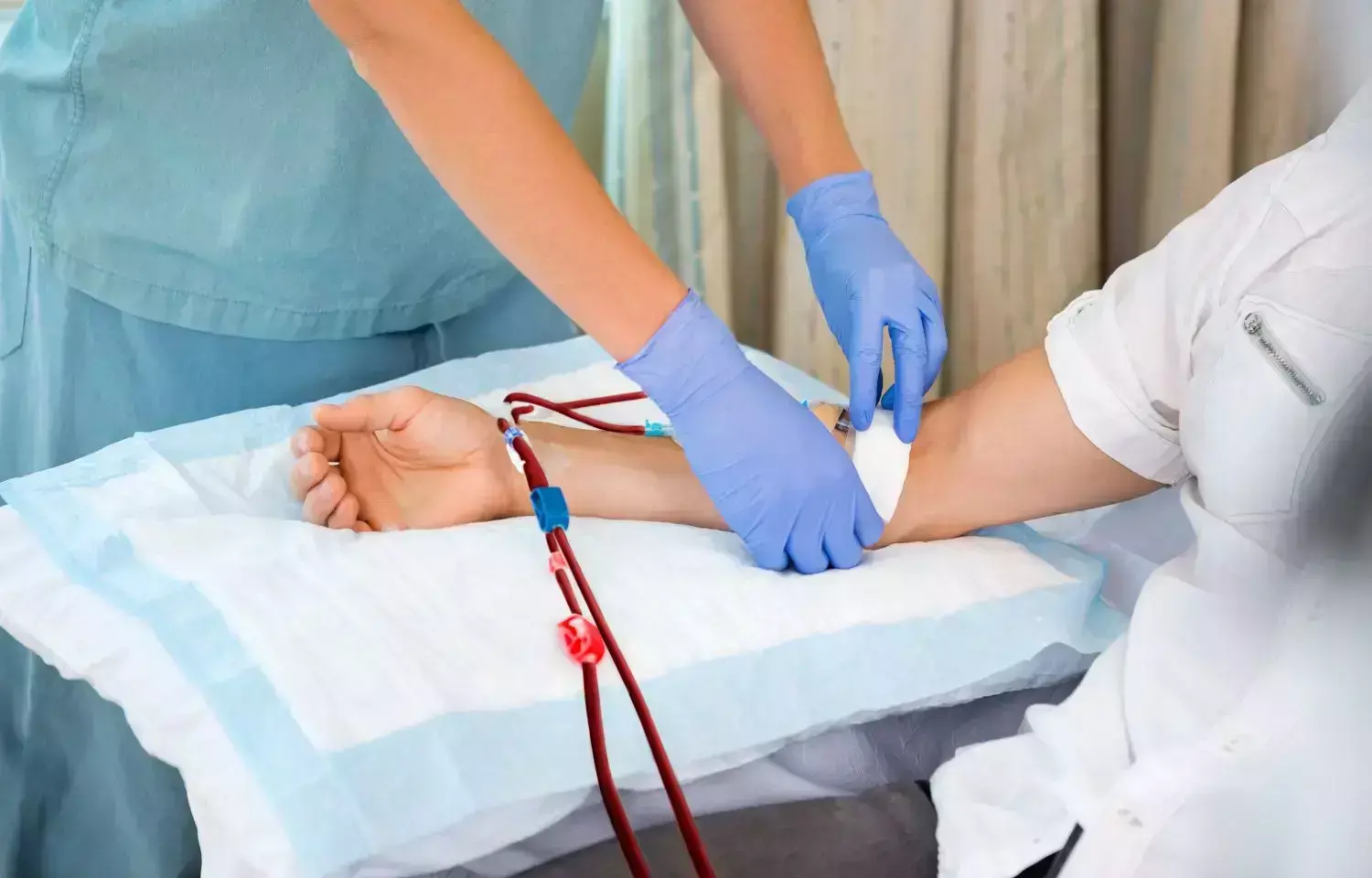
Peritoneal and Hemodialysis Show Comparable Survival in ESRD, suggests study

A new meta-analysis published in BMC Nephrology reports that there is no significant difference in overall survival between patients undergoing peritoneal dialysis (PD) and those receiving hemodialysis (HD) for end-stage renal disease (ESRD). The study analyzed data from multiple clinical investigations comparing the two dialysis modalities and found that both approaches are equally effective in maintaining patient survival. This suggests that treatment decisions can be tailored based on patient preferences, lifestyle, and clinical suitability rather than concerns about mortality differences.

The researchers noted that while overall survival outcomes were similar, certain subgroups showed slight variations. In particular, patients under the age of 65 appeared to have a lower mortality risk with peritoneal dialysis compared to hemodialysis. Regional factors also seemed to influence outcomes, suggesting that differences in healthcare access, dialysis practices, and socioeconomic conditions may play a role in survival trends. Despite these variations, the results indicate that both PD and HD remain viable and effective long-term renal replacement therapies for ESRD patients.
The findings underscore the importance of individualized treatment planning in kidney care. Healthcare providers are encouraged to evaluate patient-specific factors such as age, comorbidities, and home support systems before selecting the dialysis modality. The study also highlights the need for improved patient education about both types of dialysis to enable shared decision-making. By focusing on patient comfort, adherence, and quality of life, clinicians can ensure optimal outcomes regardless of the dialysis method chosen.
Keywords: peritoneal dialysis, hemodialysis, end-stage renal disease, patient survival, kidney care, renal replacement therapy, BMC Nephrology
Reference: BMC Nephrology. (2025). Peritoneal and hemodialysis show comparable survival in ESRD, suggests study. BioMed Central. https://bmcnephrol.biomedcentral.com/articles/10.1186/s12882-025-04530-4Is

Powered by WPeMatico

Caution advised with corporate virtual care partnerships

Provincial governments that partner with for-profit virtual health care companies need to be cautious to protect public trust in the health care system, according to an analysis article in the Canadian Medical Association Journal.

Powered by WPeMatico

Longer distance to family physician has negative effect on access to health care, study confirms

Living farther than 30 km from a family physician can negatively affect access to health care, found a new Ontario study published in the Canadian Medical Association Journal.

Powered by WPeMatico

‘Molecular glues’ and ‘bumpers’ offer new hope for precision medicines

New research led by the University of Minnesota Medical School demonstrates that molecules acting as “molecular bumpers” and “molecular glues” can rewire G protein-coupled receptor (GPCR) signaling, turning the cell’s busiest receptors into precision tools—opening the door to a new generation of safer, smarter medicines. The findings were published today in Nature.

Powered by WPeMatico

Study finds surprising link between gut and brain rhythms

The human body is packed with natural rhythms, from your sleep-wake cycle to the steady pulsing of blood through the brain to heart rate and pulse.

Powered by WPeMatico

Scientists find the genetic clues that let humans walk on two legs

Two small changes in human DNA may have played a big role in helping our ancestors walk upright, researchers say.

Powered by WPeMatico

Prediabetes and Cancer Risk: The Overlooked Connection

Prediabetes burden is rising globally and in India. The latest IDF 2025 Atlas estimated that in 2024, 634.8 million adults (12%) worldwide had IGT, including 89.9 million in India, projected to reach 156.7 million by 2050. [1] Beyond a risk for progression to T2D, there is an increasing association between prediabetes and cancer risk, although this link might vary depending on the specific type of cancer. [2]

Prediabetes and Cancer- Plausible Hyperinsulinemic Activation of Oncogenic Pathways: ​​

Insulin’s anabolic and anti-apoptotic effects drive tumor progression in individuals with hyperinsulinemia by binding to the insulin receptor (IR), insulin-like growth factor-1 receptor (IGF-IR), or hybrid IR-IGF-IR complexes. Both receptors are implicated in tumorigenesis; for instance, IR overexpression has been observed in breast and prostate cancers, where elevated levels correlate with poorer prognosis. Consequently, cancer cells become hypersensitive to insulin, particularly under conditions of obesity and diabetes that amplify its expression. Receptor activation by insulin recruits insulin receptor substrates (IRS-1 or IRS-2/4), triggering downstream pathways: the RAS/RAF/MEK/ERK cascade for mitogenic signaling and the PI3K/Akt/protein kinase B pathway for anti-apoptotic effects. Structural homology allows insulin and IGF-1 to cross-bind IR and IGF-IR, enabling insulin to exert metabolic functions primarily through IR while promoting cell growth and differentiation via IGF-IR. A hybrid IR-IGF-IR receptor emerges when both are co-expressed in the same tissue, preferentially binding IGF-1 over insulin and driving proliferative responses; such hybrids are overexpressed in malignant breast and thyroid tissues through heterodimerization. [3]

Chronic inflammatory mediators, including TNF-α and IL-6, amplify these pathways, with obesity-associated adipokine dysregulation creating a sustained pro-carcinogenic environment. [3]

Epidemiological data demonstrate significantly elevated risks for breast, colorectal, hepatocellular, pancreatic, endometrial, and prostate malignancies in IR populations, with meta-analyses confirming direct correlations to increased recurrence rates and reduced survival. [3]

Early identification of prediabetes-related metabolic dysfunction represents a critical clinical opportunity, as these pathophysiologic changes precede malignancy and constitute modifiable risk factors for cancer prevention and improved outcomes. [3]

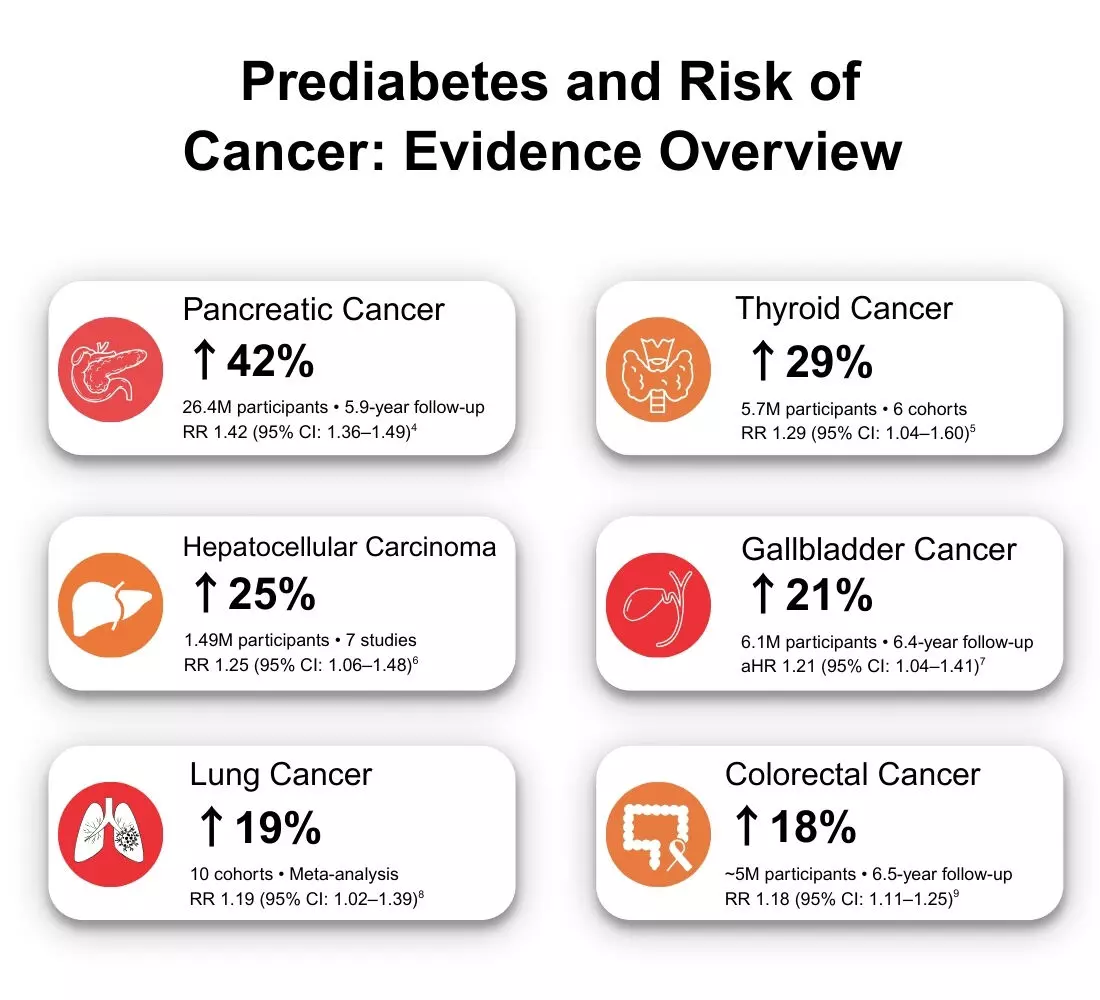
Prediabetes and Risk of Cancer: Evidence Overview [4,5,6,7,8,9]

Early Intervention in Prediabetes: Need of the Hour

The disproportionately higher prevalence of prediabetes in India (15.3%; 15,496 of 107,119) compared with diabetes (11.4%; 10,151 of 107,119), together with rapid progression and barriers to lifestyle modification, requires the need for pharmacological strategies such as metformin. Early intervention is critical, particularly as 43.3% of Indians are metabolically obese with BMI <25 kg/m² (MONO) and face an elevated T2D risk (OR=6.90; 95% CI: 5.10–9.34; P<0.001). [11]

As per recent evidence, beyond the traditional microvascular and macrovascular complications of T2D, cancer has now been recognized as one of the emerging complications of T2D. [12]

Metformin in Prediabetes

Metformin is the oldest pharmacological agent indicated for the prevention or delay of T2D. [13]

  • American Diabetes Association (ADA, 2025): Recommends considering metformin for prevention in high-risk adults (age 25–59 years, BMI >35 kg/m², FPG >110 mg/dL, HbA1c >6%, or history of GDM). (Level A recommendation) [14]
  • RSSDI–ESI (India, 2020): Advises initiating metformin in younger individuals with risk factors—either one or more risk factors regardless of BMI, or overweight/obese with IFG + IGT, or IFG + HbA1c >5.7%. [15]

Globally, metformin has been approved for prediabetes in at least 66 countries, reflecting its established role in diabetes prevention. [16]

Key Takeaways

  • Prediabetes affects 634.8 million adults globally, with India’s 89.9 million cases projected to reach 156.7 million by 2050.
  • Prediabetes increases cancer risk by 18-42% across multiple cancers through hyperinsulinemic activation of pathways that promote tumor growth.
  • India’s prediabetes prevalence (15.3%) exceeds diabetes rates (11.4%), highlighting an urgent window for preventive intervention.
  • Early metformin intervention is suggested by global guidelines for high-risk individuals with prediabetes to prevent diabetes and potentially mitigate associated health risks.

Abbreviations: ADA – American Diabetes Association, aHR – adjusted Hazard Ratio, AKT – Protein Kinase B, BMI – Body Mass Index, CI – Confidence Interval, ESI – Endocrine Society of India, FPG – Fasting Plasma Glucose, GDM – Gestational Diabetes Mellitus, HbA1c – Hemoglobin A1c (glycated hemoglobin), HR – Hazard Ratio, IDF – International Diabetes Federation, IFG – Impaired Fasting Glucose, IGF-1 – Insulin-like Growth Factor-1, IGT – Impaired Glucose Tolerance, IL-6 – Interleukin-6, IR – Insulin Resistance, IRS – Insulin Receptor Substrate, MAPK – Mitogen-Activated Protein Kinase, MONO – Metabolically Obese Normal-weight Obesity, mTOR – mechanistic Target of Rapamycin, OR – Odds Ratio, PI3K – Phosphoinositide 3-kinase, RAS – Rat Sarcoma, RR – Relative Risk, RSSDI – Research Society for Study of Diabetes in India, SHC – Src Homology 2 Domain Containing, T2D – Type 2 Diabetes, TNF-α – Tumor Necrosis Factor-alpha


Powered by WPeMatico

NISER Bhubaneswar inaugurates Medical Cyclotron and Nuclear Medicine Hospital Project

Bhubaneswar: The National Institute of Science Education and Research (NISER) Bhubaneswar marked a significant milestone in India’s healthcare and nuclear medicine sector with the ground-breaking ceremony of its Medical Cyclotron, Nuclear Medicine Hospital, and Centre for Medical & Radiation Physics. The event, celebrated on campus, was graced by Dr. Ajit K. Mohanty, Secretary of the Department of Atomic Energy (DAE).

Dr. Mohanty, who was born on October 11, 1959, has previously served as the Director of the Bhabha Atomic Research Centre (BARC) from March 2019 to September 2023. Over his distinguished career, he has contributed to multiple areas of nuclear physics, ranging from sub-Coulomb barrier collision energies to relativistic regimes, through work at the Pelletron accelerator at Tata Institute of Fundamental Research (TIFR), Phénix and CMS experiments at Brookhaven National Laboratory (BNL), USA, and CERN, Geneva.

Also Read:Odisha: Tata Memorial Cancer Hospital to get Medical Cyclotron Unit at cost of Rs 150 cr

Highlighting the event on the social media platform ‘X’ (formerly Twitter), NISER stated that the ceremony marked “a major step in advancing India’s capabilities in nuclear medicine and cancer diagnostics,” and shared that it was graced by Dr. Mohanty (@DAEIndi).

The projects are being supported by the state government and the DAE and are expected to be completed within the next 3 to 4 years, reports TOI.

The ceremony reflects India’s ongoing efforts to strengthen its scientific and medical infrastructure.

Also Read:PM Modi unveils Rs 3,000 Crore Super Specialty Hospital upgrades in Odisha

Medical Dialogues had previously reported that during a major event dedicated to development works in Jharsuguda, Odisha, Prime Minister Shri Narendra Modi officially unveiled and dedicated several key projects, including substantial investments aimed at transforming the state’s healthcare landscape. 

Powered by WPeMatico