
Integrated surveillance tops future One Health research priorities

Integrated surveillance systems that unite human, livestock, agricultural, and ecosystem experts to support early detection, community engagement, and rapid response top the five future research priorities of One Health.

Powered by WPeMatico
Elderly migrants in Swedish care homes faced higher COVID-19 mortality risk

Migrants from low-income countries living in care settings in Sweden were more likely to die from COVID-19 than people born in the country during the first year of the pandemic, according to a new study by researchers from Stockholm University, published in the European Journal of Public Health. The finding stands out, since elderly migrants in daily care usually have a higher life expectancy than Swedish-born individuals in similar circumstances.

Powered by WPeMatico

Elderly migrants in Swedish care homes faced higher COVID-19 mortality risk

Migrants from low-income countries living in care settings in Sweden were more likely to die from COVID-19 than people born in the country during the first year of the pandemic, according to a new study by researchers from Stockholm University, published in the European Journal of Public Health. The finding stands out, since elderly migrants in daily care usually have a higher life expectancy than Swedish-born individuals in similar circumstances.

Powered by WPeMatico

Elderly migrants in Swedish care homes faced higher COVID-19 mortality risk

Migrants from low-income countries living in care settings in Sweden were more likely to die from COVID-19 than people born in the country during the first year of the pandemic, according to a new study by researchers from Stockholm University, published in the European Journal of Public Health. The finding stands out, since elderly migrants in daily care usually have a higher life expectancy than Swedish-born individuals in similar circumstances.

Powered by WPeMatico

Elderly migrants in Swedish care homes faced higher COVID-19 mortality risk

Migrants from low-income countries living in care settings in Sweden were more likely to die from COVID-19 than people born in the country during the first year of the pandemic, according to a new study by researchers from Stockholm University, published in the European Journal of Public Health. The finding stands out, since elderly migrants in daily care usually have a higher life expectancy than Swedish-born individuals in similar circumstances.

Powered by WPeMatico

Health data in England show changing patterns of heart diseases before, during and after the pandemic

A comprehensive study of electronic health records for 57 million people living in England has revealed the evolving burden of cardiovascular diseases before, during and after the COVID-19 pandemic.

Powered by WPeMatico

Health data in England show changing patterns of heart diseases before, during and after the pandemic

A comprehensive study of electronic health records for 57 million people living in England has revealed the evolving burden of cardiovascular diseases before, during and after the COVID-19 pandemic.

Powered by WPeMatico

Health data in England show changing patterns of heart diseases before, during and after the pandemic

A comprehensive study of electronic health records for 57 million people living in England has revealed the evolving burden of cardiovascular diseases before, during and after the COVID-19 pandemic.

Powered by WPeMatico

Health data in England show changing patterns of heart diseases before, during and after the pandemic

A comprehensive study of electronic health records for 57 million people living in England has revealed the evolving burden of cardiovascular diseases before, during and after the COVID-19 pandemic.

Powered by WPeMatico

ADALA Trial: DOACs Match DAPT in Thrombosis Prevention but Cut Bleeding Risk

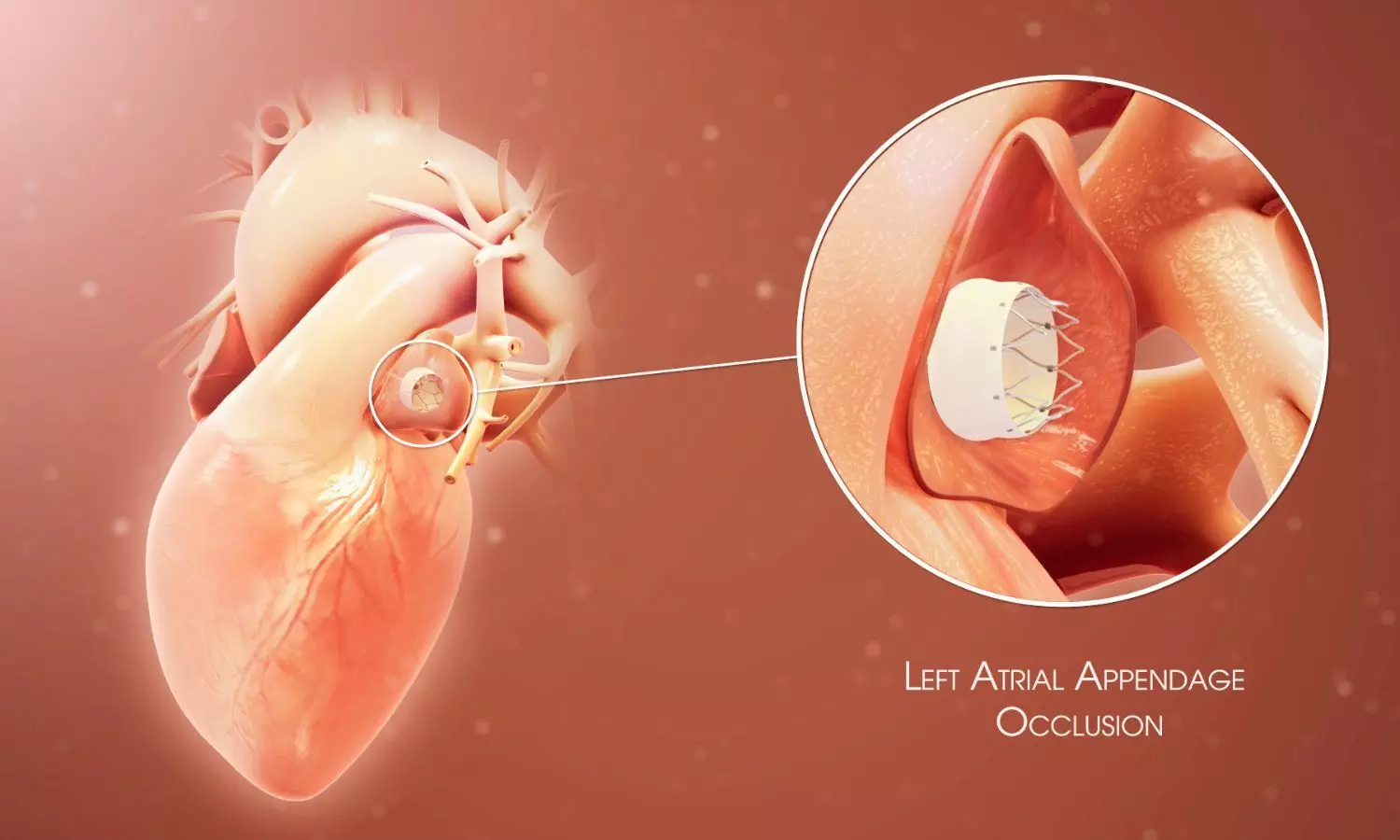
USA: The final results of the ANDES (Antithrombotic Therapy for the Prevention of Device-Related Thrombosis After Left Atrial Appendage Occlusion) trial, presented at the Transcatheter Cardiovascular Therapeutics (TCT) 2025 conference, have offered important insights into post-procedural therapy after Left Atrial Appendage Occlusion (LAAO).

The findings suggest that Direct Oral Anticoagulants (DOACs) are as effective as dual antiplatelet therapy (DAPT) in preventing device-related thrombosis (DRT) while significantly reducing the risk of bleeding.
LAAO is often performed in patients with non-valvular atrial fibrillation who are at high risk of stroke but unsuitable for long-term anticoagulation. Following device implantation, there remains a potential for thrombosis formation on the device surface. Traditionally, physicians have prescribed aspirin and clopidogrel for one to three months after the procedure. However, this standard dual antiplatelet therapy carries a bleeding risk, particularly in older adults and patients with multiple comorbidities. The ANDES trial aimed to determine whether a DOAC-based approach could provide equivalent protection against thrombosis with better safety.
The trial was a multicenter, randomized, controlled study enrolling patients who had undergone successful LAAO. Participants were randomly assigned to receive either a DOAC or a DAPT regimen immediately after the procedure. The primary efficacy measure was the incidence of device-related thrombosis at 60 days, while major and clinically relevant non-major bleeding events were the main safety endpoints. Most patients enrolled were elderly, had high CHA₂DS₂-VASc scores, and were considered at high risk for both thromboembolic and bleeding events.   

Findings
from the trial were as follows:

  • After
    60 days, there was no significant difference in device-related thrombosis rates between the DOAC and DAPT groups.
  • Overall
    event rates were low and aligned with previous registry data.
  • Patients
    on DOACs experienced fewer bleeding complications, including
    gastrointestinal and access-site bleeding.
  • The
    DOAC group showed a lower rate of net adverse clinical events.
  • Short-term
    safety outcomes were better in patients treated with DOACs.
According to the study’s principal investigator, while DOACs did not reduce thrombosis rates compared to DAPT, they clearly offered a superior safety profile. The results indicate that a short course of DOAC therapy could serve as a safer alternative to DAPT following LAAO, especially for patients at high risk of bleeding.
The findings also highlight that factors beyond systemic anticoagulation—such as device design, incomplete endothelialization, or peri-device leaks—may play a greater role in thrombosis formation. Despite similar efficacy, the safety advantage of DOACs makes them a practical option for post-LAAO care.
Researchers emphasized that larger and longer-duration studies are needed to confirm whether the short-term safety benefits of DOACs translate into improved long-term outcomes, including stroke prevention and late device-related thrombosis. Until then, the ANDES trial contributes valuable evidence supporting personalized post-LAAO antithrombotic strategies that balance efficacy with safety in patients with atrial fibrillation.
Reference:

Powered by WPeMatico