Submit Current Safety Data of Indians: CDSCO Panel Tells Glenmark on anti-cancer drug ISB1442

New Delhi: Reviewing the Phase I/II clinical study protocol of the anti-cancer drug ISB1442 presented by the drug major Glenmark, the Subject Expert Committee (SEC) functional under the Central Drug Standard Control Organisation (CDSCO) has opined the firm to submit the current safety data including data of Indian subjects from the already approved clinical trial in India.

This came after the drug maker Glenmark presented Phase I/II clinical study protocol No. ISB 1442-102, version 1.0 dated 16 Feb 2024.

ISB 1442 is a bispecific, biparatopic antibody targeting CD38 and CD47, generated using Ichnos’ Bispecific Engagement by Antibodies based on the T cell receptor (BEAT ) platform. ISB 1442 is designed to kill CD38-expressing tumor cells through multiple mechanisms of action including blocking the CD47-signal regulatory protein alpha (SIRPα) axis to increase several antibody effector functions: antibody-dependent cellular phagocytosis (ADCP), antibody-dependent cellular cytotoxicity (ADCC) and complement-dependent cytotoxicity (CDC) through optimized architecture, affinity to targets, and Fc engineering.

ISB 1442 consists of two anti-CD38 arms targeting two distinct epitopes that preferentially drive binding to tumor cells and enable avidity-induced blocking of proximal CD47 receptors on the same cell while preventing on-target off-tumor binding on healthy cells. The Fc portion of ISB 1442 is engineered to enhance complement-dependent cytotoxicity, antibody-dependent cell cytotoxicity, and antibody dependent cell phagocytosis.

At the recent SEC meeting for Oncology on 5th March 2024, the expert panel reviewed the Phase I/II clinical study protocol No. ISB 1442-102, version 1.0 dated 16 Feb 2024 presented by the drug major Glenmark.

After detailed deliberation, the committee opined that the firm should submit current safety data including data of Indian subjects from an already approved clinical trial in India for further review by the committee.

Also Read: CDSCO Panel Approves AstraZeneca’s Protocol Amendment Proposal For Anti-cancer Drug Osimertinib

Powered by WPeMatico

Research team identifies new treatment target for Alzheimer’s disease

Researchers at the University of Leeds and Lancaster University in the UK have identified a new potential target for the treatment of Alzheimer’s disease—PDE4B. Their work is published in Neuropsychopharmacology.

Powered by WPeMatico

More must be done for depressed stroke survivors as incidence climbs, say researchers

Researchers say that more must be done for depressed stroke survivors, as new findings show 60% of stroke survivors would experience depression within 18 years, a much higher estimation than previous studies.

Powered by WPeMatico

New surfactant could improve lung treatments for premature babies

Scientists have developed a new lung surfactant that is produced synthetically rather than relying on the use of animal tissues. With further development, the formulation could provide a cheaper and more readily available alternative to Infasurf, a medication used to prevent and treat respiratory distress in premature babies.

Powered by WPeMatico

Study suggests that estrogen may drive nicotine addiction in women

A newly discovered feedback loop involving estrogen may explain why women might become dependent on nicotine more quickly and with less nicotine exposure than men. The research could lead to new treatments for women who are having trouble quitting nicotine-containing products such as cigarettes.

Powered by WPeMatico

Study suggests statins could help fight gum disease

Could taking statins benefit your mouth in addition to your arteries? A new study conducted in cell cultures has shown that cholesterol-lowering drugs help to dampen the inflammation associated with periodontal disease by altering the behavior of macrophages, a type of immune cell.

Powered by WPeMatico

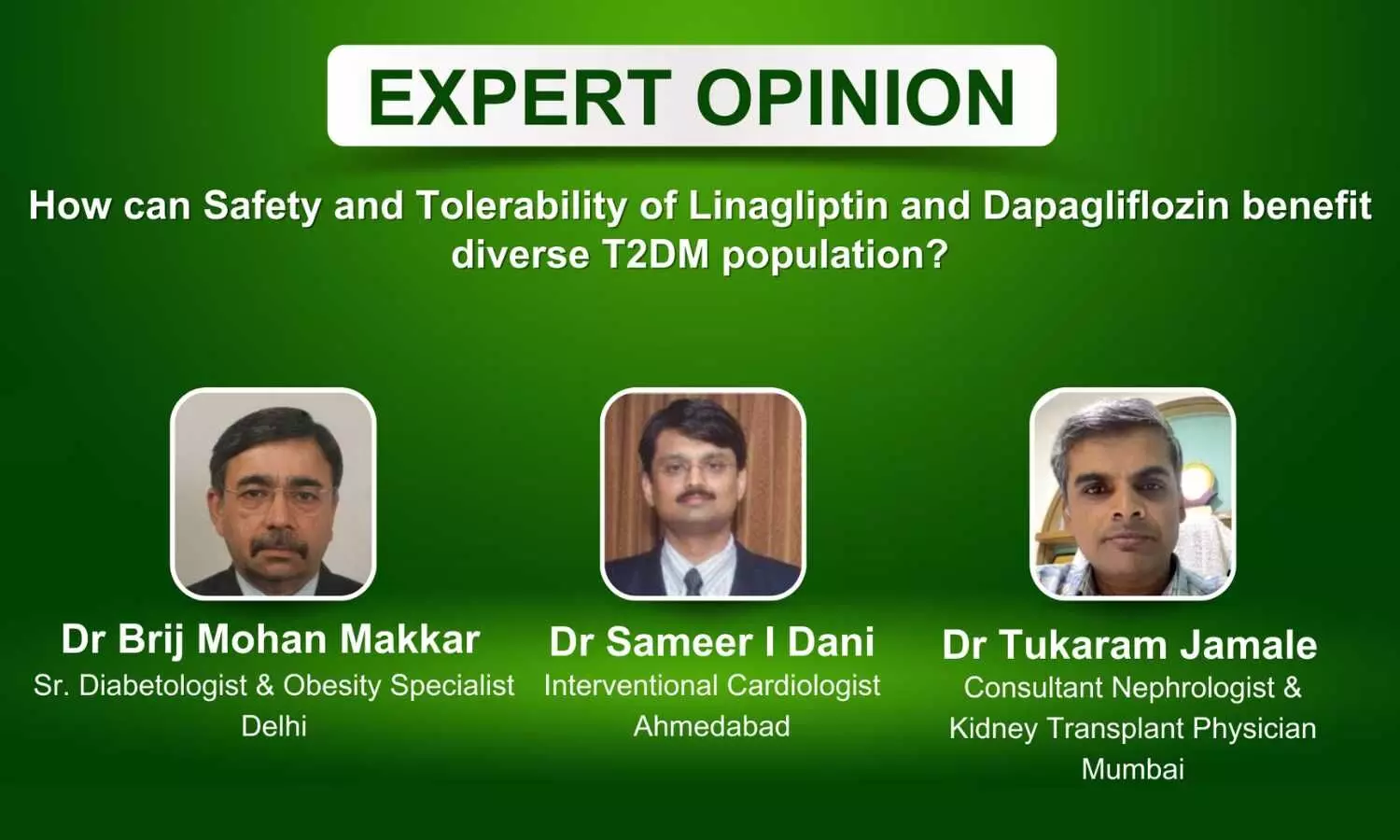
Evergreen Talk Series: How can Safety and Tolerability of Linagliptin and Dapagliflozin benefit diverse T2DM population?

Presenting the Evergreen Talk Series featuring Dr. Brij Mohan Makkar, a Senior Diabetologist and Obesity Specialist from Delhi, Dr Sameer I. Dani, an Interventional Cardiologist from Ahmedabad, and Dr. Tukaram Jamale, a Nephrologist and Kidney Transplant Physician who serves as the Head of the Department at KEM Hospital Mumbai. They provide their insights on the use of Linagliptin, Dapagliflozin, and Metformin for diabetic patients.

Bringing viewpoints from the different specialities of Diabetology, Cardiology and Nephrology, they share their views about How can Safety and Tolerability of Linagliptin and Dapagliflozin benefit diverse T2DM population.

Dr Brij Mohan Makkar: The major issue that troubles people is the
increased risk of genito UTI infections, which can largely be taken care of by
maintaining good hygiene. If somebody gets a genito UTI, it can be treated
easily, and if somebody is experiencing recurrent genito UTIs, you can
discontinue this medication. Otherwise, largely they are very safe molecules
and have been shown to be safe even in people who have CKD or advanced liver
disease, elderly, and so on. As far as safety is concerned, I don’t think there
is a major concern, another important thing is when you are combining
a gliptin and SGLT2i, studies have shown that the risk of genito UTI further
goes down. So, it is kind of again a beneficial effect when you are combining
these two molecules to provide not only synergy but also cut down the side
effects.

Dr Sameer I Dani: Dapagliflozin
safety signals are there with extensive evidence. Dapagliflozin produces
cardiovascular benefits in terms of improved function but also includes
mortality or survival benefits in patients with HF. Linagliptin, out of all
DPP4 inhibitors, all gliptins, I think Linagliptin has maximum safety evidence
for renal outcomes. Linagliptin also has clear CV neutrality, in that sense
that it does not show any concerns as far as cardiovascular safety is
concerned, for instance, we are not there, so
that way I think combination works out very well in terms of their evidence as
far as safety is concerned.

Dr Tukaram Jamale: When
practically using these agents individually, they are very safe. When combining
them, it is better to proceed step by step and monitor how therapy is tolerated
by the patient and if any untoward effects are encountered. Most of the time,
you will be able to introduce all of these evidence-based therapies, but then
one has to be careful in monitoring them serially. Subsequently, if they are
introduced, they can be put to the best use.

Powered by WPeMatico

Why So Many Doctors Especially Residents Suffer From Burnout Syndrome? – Dr Rahul Chawla

What is Burnout Syndrome (BOS)?

Burnout Syndrome is a subjective feeling of being
emotionally drained, feeling low and unable to keep with the incessant demands
at work place. It occurs in individuals without any prior history of
psychological or psychiatric disorders. BOS is often triggered by toxic work
environment, stress at work place and discrepancy between the expectations of
the employer or boss and work output of the employee.

Burnout Syndrome is highly prevalent in medical schools and
hospitals especially among residents and junior doctors because of the huge
load of studies, high patient load, unrealistic demands of senior consultants
on one hand and patients on the other and the dissatisfaction for not giving
enough time to themselves and their families.

Medical profession is known to have a toxic senior junior
relationship. There is a tendency of the system to put most of the manual work
on the residents. The strict 24 hours and 36 hours duty leaves very little time
for self-care, family and relationship, which makes them emotionally drained.

Due to the constant harassment, they even start hating their
jobs and seek a way out. The toxic workspace is a breeding ground for
depression and anxiety which in some instances leads to suicide.

How to prevent and manage Burnout Syndrome in workplace?

Burnout Syndrome hinders growth of an individual in the
organisation. It not just affects his/her professional life, but personal life
as well. It can lead to depression, anxiety and even suicides.

1. As an employer, hospital administrator or head of the
department, it is important to identify those who are having or likely to be
having Burnout Syndrome

2. Talk to the residents and listen to their complaints with
compassion

3. It’s better that they let the residents have their time
for family, relationships and for themselves.

4. For residents, it is imperative that they take support of
someone they trust, could be a faculty or co-worker or anyone outside the
hospital.

5. Take regular holidays and spend time with family and
friends

6. Take short breaks while working and do deep breathing,
relaxation or just go outside for a walk or fresh air.

7. If unable to deal with mood changes, seek professional
help. Do not hesitate to consult a psychiatrist.

Mental health is still a taboo in medical colleges and
hospitals. Nobody discusses the issue openly. Constant harassment impairs the
quality of work which in turn leads to more scoldings at rounds and this vicious
cycle goes on like that. It is important for us to break this chain and get rid
of this mentality of ‘just because we have faced it, our juniors must face that
as well’.

Disclaimer: The views expressed in this article are of the author and not of Medical Dialogues. The Editorial/Content team of Medical Dialogues has not contributed to the writing/editing/packaging of this article.

Powered by WPeMatico

Navigating Vaccines: How They Help And What Challenges They Face? – Dr Meghana Andankar

Introduction

Vaccines are
like superheroes for our bodies. They protect us from dangerous diseases and
have made our lives much healthier. But sometimes, even superheroes face
challenges. Let’s explore how vaccines work, what amazing things they’ve done,
and the problems that still need to be tackled.

How Vaccines
Help?

Picture vaccines
as tiny teachers for our immune system. They contain weakened or killed
versions of germs that cause diseases. When we get vaccinated, our body learns
to recognize these germs and builds defences against them.

So, if we ever come
across real germs, our body can swoop in and defeat them before they have a
chance to harm us. It’s like having a secret weapon inside us, ready to spring
into action whenever needed.

Vaccine
Success Stories

Vaccines have
achieved some incredible victories in the battle against diseases. One of their
biggest wins was wiping out smallpox, a deadly disease that once haunted
humanity. Thanks to vaccines, smallpox no longer threatens us.

Vaccines have
also come close to eliminating other diseases like polio, measles, and rubella
in many places around the world. Because of vaccines, fewer people get sick,
and fewer lives are lost to these once-deadly diseases.

Challenges
Vaccines Face

Vaccine
development encounters formidable challenges, particularly with diseases prone
to mutation. Failure to adhere strictly to the vaccine production process can
precipitate disease outbreaks. The complexities of maintaining the cold chain
during storage and transportation further exacerbate these challenges.

Despite
concerted efforts, the scientific community is yet to develop a vaccine for
HIV. Furthermore, vaccines come in two forms: live and dead. Improper
administration of live vaccines can inadvertently induce disease in recipients.
Tragically, instances of children succumbing to vaccination underscore the
gravity of this issue.

Facing New
Threats

Vaccine
development faces daunting challenges, especially with diseases prone to
mutation like swine flu and bird flu. Strict adherence to the vaccine
production process is essential to prevent disease outbreaks. The intricate
logistics of maintaining the cold chain during storage and transportation
further complicate matters.

Despite extensive efforts, vaccines for diseases
such as HIV remain elusive. Moreover, vaccines must be produced in record time
due to the emergence of new diseases like COVID-19 and its variants.

Although
scientists have developed COVID-19 vaccines at an unprecedented pace, achieving
widespread vaccination has proven difficult. This inequality in access hampers
global efforts to curb the virus’s spread.

Looking to
the Future

Emerging
technologies, like nanoparticle-based vaccines or patches, offer potential for
more convenient and effective vaccination methods. Additionally, there’s a
growing commitment to ensuring fair access to vaccines worldwide and better
preparation for future outbreaks. These combined efforts aim to improve
vaccines and promote global health.

Conclusion

Vaccines have
done amazing things for our health, but they still have work to do. By fighting
vaccine fears, tackling new diseases, and embracing new technology, we can keep
vaccines as our trusted protectors against dangerous diseases. Let’s keep
supporting the superheroes of our immune systems!

Disclaimer: The views expressed in this article are of the author and not of Medical Dialogues. The Editorial/Content team of Medical Dialogues has not contributed to the writing/editing/packaging of this article.

Powered by WPeMatico

Why UCPMP-2024 Needs Teeth: Moving Beyond Voluntary Compliance

Preamble

In the landscape of pharmaceutical
marketing ethics, the UCPMP (Uniform Code of Pharmaceutical Marketing
Practices) has been a cornerstone, albeit with limited efficacy.

The inception of UCPMP-2014 as a
voluntary framework aimed to instil Good Marketing Practices within the Indian
pharmaceutical industry, yet its lack of enforcement mechanisms rendered it
toothless against transgressions.

Fast forward to March 2024, the
emergence of UCPMP-2024 introduces notable revisions, including mandatory
disclosure of expenses for medical promotion and grants to healthcare
professionals.

While these changes signify
progress, the efficacy of such voluntary measures remained debatable.

History of UCPMP

This editorial delves into the
evolution of UCPMP and explores the necessity for more robust legal frameworks
to truly deter unethical practices within the pharmaceutical sector.

On December 12, 2014,
the central government introduced the Uniform Code of Pharmaceutical Marketing
Practices (UCPMP-2014), intended for voluntary adoption and adherence by
pharmaceutical enterprises concerning marketing activities.

It was explicitly
stated that failure to effectively implement the code by pharmaceutical
associations/companies could prompt the government to enact it as a statutory
provision.

Despite the initial
stipulation of a six-month duration for the UCPMP-2014, subsequent extensions
by the Department of Pharmaceuticals (DoP), totaling five instances, culminated
in the extension of the UCPMP Code, 2014, until further directives were issued
on August 30, 2016. This series of extensions suggested a lack of enthusiasm on
the part of the DoP towards the implementation of the UCPMP-2014.

The implications for the
pharmaceutical industry were unequivocal, as evident from the prevailing
circumstances.

In the year 2021, the
Federation of Medical and Sales Representatives Association of India,
functioning as a non-governmental organization (NGO), lodged a petition with
the Supreme Court of India. Their plea sought the formulation of comprehensive
directives aimed at curbing unethical marketing strategies employed by
pharmaceutical entities.

This petition was made with the intent to fill the
regulatory void until the enactment of specific legislative measures by the
Parliament. Presently, the case remains under consideration by the Court,
awaiting its final adjudication.

The UCPMP-2014 aimed to create a level playing field for
pharmaceutical companies, encouraging innovation and patient-centered marketing
practices. However, practical challenges must be addressed for effective
enforcement.

Stricter regulations covering indirect influences, and robust
oversight mechanisms are essential to achieving UCPMP’s objectives and
promoting ethical practices in pharmaceutical and medical devices marketing.

The UCPMP-2014 had the intent of fostering equitable
conditions among pharmaceutical companies, fostering innovation, and advocating
for patient-centric marketing methodologies. Nevertheless, the realization of
its objective’s hinges upon the resolution of pragmatic hurdles.

Enforcing its
provisions effectively necessitates the implementation of more stringent
regulations encompassing indirect influences, alongside the establishment of
robust oversight mechanisms.

These measures are imperative for ensuring the
attainment of UCPMP-2014 goals and fostering a culture of ethical conduct
within the realms of pharmaceutical and medical devices marketing.

The Department of Pharmaceuticals (DoP) issued a
new policy on March 12, 2024. This policy, known as the Uniform Code for
Pharmaceutical Marketing Practices (UCPMP-2024), establishes guidelines for the
ethical promotion of pharmaceuticals.

The DoP directed all pharmaceutical
associations (like IPA, OPP; IDMA) to disseminate the UCPMP-2024 to their
members and ensure its strict compliance.

The UCPMP-2024 outlines acceptable practices for
activities such as interactions with healthcare professionals, distribution of
informational materials, and providing samples. It also establishes a framework
for addressing unethical marketing practices. This policy aims to promote
ethical conduct within the pharmaceutical industry.

Hopes with UCMP-2024

UCPMP-2024) establishes ethical guidelines for drug
promotion. It defines acceptable activities for medical representatives, brand
materials, samples, and interactions with healthcare professionals.
Additionally, it provides a framework for addressing unethical marketing
practices.

Here are some of the key and the new features of UCPMP-2024.

  • Conduct of pharmaceutical and medical
    devise representatives
    : Pharmaceutical and medical devise representatives must
    strictly adhere to ethical guidelines. Misleading or exaggerated claims are
    prohibited, promoting accurate information dissemination about the product’s
    benefits and potential side effects.
  • No gifts and incentives: Gifts,
    incentives, or any form of personal benefits from pharmaceutical and medical
    devise entities to healthcare professionals or their families are strictly
    prohibited. This includes travel, hospitality, or financial inducements that
    may influence prescription decisions.

However, exceptions are made for
educational items such as books, calendars, and clinical guidelines, provided
their value does not exceed Rs. 1000 and they serve professional purposes
without independent commercial value.

Additionally, this means medical professionals can receive travel and
hospitality support for participating as speakers in Continuing
Medical Education (CME) or Continuing Professional Development (CPD) programs.

These measures aim to maintain the integrity of healthcare decision-making
processes and ensure that medical professionals prioritize patient welfare over
personal gain.

  • Continuous Medical Education: This fosters medical professional’s development. UCPMP-2024
    establishes clear guidelines for Continuing Medical Education (CME) and
    Continuing Professional Development (CPD) programs.

These programs must be held within the country and can be
organized by pharmaceutical companies independently or collaboratively.

Companies sponsoring such programs are required to
disclose their expenditures on a dedicated website. Additionally, organizers
must also publicly display a statement outlining funding sources and the
selection process for participants and speakers.

It’s important to note that all parties involved,
including the company, organizers, speakers, and participants, must comply with
the Income Tax Act (Section 194R) to ensure financial transparency and accountability.

  • Support for Research: The UCPMP-2024 regulates interactions between
    pharmaceutical companies and medical professional for research purposes. The medical professionals’ involvement, in a consulting
    or advisory role, must be for legitimate research with a formal agreement and
    appropriate compensation complying with existing regulations.

These interactions must
prioritize patients’ well-being and the patient interest is not compromised.

It upholds HCP integrity,
adhering to relevant National Medical Commission (NMC) regulations and
guidelines. Research must be approved by a competent authority and conducted at
a designated location, if applicable.

Expenditure on
research by pharmaceutical companies is an allowable expenditure subject to the
provisions of the Income Tax Act 1961 as amended from time to time.

  • Relationships with
    medical professionals
    : The UCPMP-2024 forbids pharmaceutical companies and their
    associates from offering gifts or financial benefits to healthcare
    professionals (HCPs) or their families. This extends to both direct and
    indirect benefits, ensuring ethical interactions and fair prescribing
    practices.

UCPMP-2024 further restricts pharmaceutical companies or
their agents including stockists and distributors from offering travel or
hospitality to HCPs or their families, except for approved speakers at
Continuing Medical Education (CME) or Continuing Professional Development (CPD)
events. This ensures unbiased interactions and discourages undue influence.

The UCPMP-2024 prohibits cash or monetary grants to
healthcare professionals or their families.

When it lacks clarity on
interactions with HCPs, adhere to the Indian Medical Council Regulations
(Professional Conduct, Etiquette, and Ethics) of 2002.

  • Additional guidelines: Additional guidelines are integrated into
    UCPMP-2024, detailing complaint procedures, issue resolution, penalties, and
    CEO duties in pharmaceutical companies.

The Ethics Committee for Pharmaceutical Marketing Practices (ECPMP)
within each association holds authority to take necessary actions its members,
such as suspension or expulsion, upon confirming a breach of the UCPMP-2014.
When governmental intervention is required, recommendations are forwarded
through the DoP.

The UCPMP-2024 establishes a new appeals process. If parties
disagree with a decision by the ECPMP, they can appeal to the Apex Committee
for Pharma Marketing Practices (ACPMP). The ACPMP has the authority to impose
penalties or refer matters to relevant government agencies. Their decision is
final and binding on all parties involved.

Under UCPMP-2024 CEOs of pharmaceutical companies are held
accountable for following it meticulously. They must submit a yearly
self-declaration within two months of their fiscal year-end. This declaration
can be uploaded to their industry association’s website or directly to the
government’s UCPMP-2014 portal if they are not part of an association.

Conclusion

In
the realm of pharmaceutical marketing, a crucial aspect often overlooked is the
integration of a patient-centered approach.

UCPMP-2024,
while comprehensive, fails to acknowledge the pivotal role of
patient-centricity in promoting healthcare solutions. A patient-centered
marketing approach prioritizes the needs, preferences, and well-being of
patients above all else.

By
fostering open communication, understanding individual experiences, and
tailoring solutions accordingly, this approach enhances trust and engagement
within the healthcare ecosystem. Empowering patients with information and
involving them in decision-making processes not only improves treatment
adherence but also fosters a sense of ownership over their health journey.

Incorporating
patient narratives, feedback mechanisms, and support networks into marketing
strategies can bridge the gap between pharmaceutical companies and the
individuals they serve.

Embracing
a patient-centered mindset isn’t merely a moral imperative but a strategic
imperative for driving sustainable healthcare outcomes and fostering long-term
partnerships built on empathy and mutual respect.

Nevertheless,
UCPMP-2024 represents a significant advancement in ensuring ethical conduct
within the pharmaceutical industry. This code establishes clear guidelines for
marketing practices, fostering a more transparent and responsible environment.

We
must seriously consider the argument put forth by Sudhansh Pant, a former Joint
Secretary at the Department of Pharmaceuticals (DoP). His experience positions
him well to assess the potential of public exposure in deterring unethical
marketing practices.

The UCPMP-2024 can be significantly strengthened through
robust enforcement mechanisms that include the public disclosure of violations.
The threat of reputational damage can serve as a powerful motivator for both
pharmaceutical companies and medical professionals to adhere to the code’s
principles.

The Physician
Payments Sunshine Act – USA

The Physician
Payments Sunshine Act USA serves as a potential model for nations seeking to
promote ethical conduct among medical professionals and responsible marketing
practices within the pharmaceutical industry.

The Physician Payments Sunshine
Act (Sunshine Act), though enacted in 2010, continues to influence marketing
practices in 2024. We shall now assess the ramifications of this Sunshine Act
on both medical professionals and the pharmaceutical industry of USA.

For
Medical Professionals:

  • Transparency: Sunshine Act data is publicly available. This
    means medical professionals must be more mindful of the financial ties
    they have with pharmaceutical companies.

Excessive industry payments
might raise eyebrows about a doctor’s objectivity.

  • Accountability: Doctors can review, and
    dispute data attributed to them. This encourages them to maintain accurate
    records of industry interactions.

For the Pharmaceutical Industry:

  • Scrutiny: Knowing their payments are exposed,
    pharmaceutical companies are likely to be more cautious about excessive or
    questionable payments to doctors.

This discourages lavish
gifts or sponsorships that might influence prescribing habits.

  • Focus on Value: Sunshine Act puts the
    spotlight on the value a company brings.

Pharma companies might shift
their focus towards educational programs, research collaborations, or offering
tools that genuinely improve patient care.

The Act’s public disclosure of financial ties
between these entities fosters transparency and accountability, ultimately
aiming to ensure patient well-being remains the primary focus. It creates a system where financial relationships are exposed, fostering
a shift towards interactions based on genuine value exchange and ultimately
promoting better practices in the healthcare industry.

In light of the Sunshine
Act’s effectiveness, the author proposes the DoP to leverage its strengths when
crafting a new legislative framework to supersede the UCPMP-2024. The author
contends unequivocally that the UCPMP-2024 should transition from a voluntary
initiative to statutory law. This small incremental step paves the way for
potentially stronger regulations in the future.


Disclaimer: The views expressed in this article are of the author and not of Medical Dialogues. The Editorial/Content team of Medical Dialogues has not contributed to the writing/editing/packaging of this article.

Powered by WPeMatico