Liquid synthetic detergents good option for Atopic Dermatitis patients

Liquid synthetic detergents are often acidic, making them suitable for individuals with atopic dermatitis. According to new research presented at the 2024 American Academy of Allergy, Asthma & Immunology Annual Meeting, these detergents may provide better results for atopic dermatitis patients.

Due to the many options available and conflicting claims on labels, it may be confusing when looking for skin cleanser products for Atopic dermatitis. However, if manufacturers disclose the pH of their products, it can help narrow down the choices. Liquid synthetic cleansers are particularly effective because they closely resemble the pH of normal skin.
AD skin changes pH from acidic to alkaline, contributing to skin-barrier dysfunction. Researchers investigated the pH of 250 cleansing products used for atopic dermatitis (AD) skincare using an Accumet pH meter. Solutions were made by dissolving 1 mL of liquid product or 1g of bar scrapings in 9 mL of distilled water, and pH values 6.65 to 7.35 were considered neutral.
Findings from this research are:
· Of the 250 cleansing products, 37 were soaps, 32 bar soaps and five liquid soaps, and 213 were synthetic detergents (syndets), 14 bar syndets and 199 liquid syndets.
· All soaps were alkaline
· Soap labels did not disclose pH levels.
· In 14 syndet bars, 6 had neutral pH, and eight were alkaline.
· Among the 199 syndet liquids, 84.9% were acidic, 11.1% were neutral, and 4% were alkaline.
· Only 32 syndets, 16.1%, disclosed pH levels.
· Nine bars were labelled ‘balanced’, with 6 having a neutral pH and 3 having an alkaline pH. Of the remaining 23 syndets, 20 were also referred to as ‘balanced’, with 2 having a neutral pH, 18 with acidic and 3 with a pH range of 4.25 to 6.0″ (pH was 4.40 to 6.11).
· Only 12.8% of cleansers disclosed pH, and the pH varied widely among brands. 84.5% of liquid syndets were acidic, and 11% were neutral.
According to recent findings, liquid syndets may be a better option for patients with atopic dermatitis. Including pH levels on product labels can help health providers advise patients with atopic dermatitis more appropriately.
Reference:
PH Labelling of Skin Cleansers Can Lead to Better Options for People with Atopic Dermatitis. The American Academy of Allergy, Asthma & Immunology (AAAAI). February 20, 2024. https://www.prweb.com/releases/ph-labelling-of-skin-cleansers-can-lead-to-better-options-for-people-with-atopic-dermatitis-302066157.html#:~:text=%22Manufacturers%20that%20choose%20to%20disclose,closely%20mimic%20normal%20skin%20pH.%22&text=Skin%20with%20atopic%20dermatitis%20(AD,contributes%20to%20skin%2Dbarrier%20dysfunction. Date accessed: February 20, 2024.

Powered by WPeMatico

AstraZeneca blood disorder drug recommended for EU nod

Cambridge: AstraZeneca has announced that Voydeya (danicopan) has been recommended for marketing authorisation in the European Union (EU) as an add-on to ravulizumab or eculizumab for the treatment of adult patients with paroxysmal nocturnal haemoglobinuria (PNH) who have residual haemolytic anaemia.

Voydeya is a first-in-class, oral, Factor D inhibitor developed as an add-on to standard-of-care Ultomiris (ravulizumab) or Soliris (eculizumab) to address the needs of the approximately 10-20% of patients with PNH who experience clinically significant extravascular haemolysis (EVH) while treated with a C5 inhibitor.

The Committee for Medicinal Products for Human Use (CHMP) of the European Medicines Agency (EMA) based its positive opinion on results from the pivotal ALPHA Phase III trial. Results from the 12-week primary evaluation period of the trial were published in The Lancet Haematology.

PNH is a rare and severe blood disorder characterised by the destruction of red blood cells within blood vessels, known as intravascular haemolysis (IVH), and white blood cell and platelet activation that can cause thrombosis (blood clots) and result in organ damage and potentially premature death. Immediate, complete and sustained terminal complement inhibition by blocking the C5 protein helps reduce symptoms and complications, resulting in improved survival for patients with PNH. Approximately 10-20% of people living with PNH who are treated with a C5 inhibitor experience clinically significant EVH, which can result in continued symptoms of anaemia and require blood transfusions.

Professor Hubert Schrezenmeier, MD, Medical Director, Institute of Transfusion Medicine at The University of Ulm, said, “C5 inhibition with Ultomiris or Soliris is the standard-of-care in PNH, proven to control IVH and reduce life-threatening thrombotic events, yet a small portion of patients may experience clinically significant EVH. In the ALPHA trial, Voydeya as an add-on to Soliris or Ultomiris increased haemoglobin levels and reduced fatigue, anaemia and transfusion dependence. If approved, Voydeya may optimise care for people impacted by this burdensome condition while allowing patients to maintain disease control with an established C5 inhibitor.”

Marc Dunoyer, Chief Executive Officer, Alexion, said, “The positive CHMP recommendation recognises the promise of Voydeya as an add-on to standard-of-care to address signs and symptoms of clinically significant EVH for this small subset of patients. As we saw in the pivotal ALPHA Phase III trial, dual complement pathway inhibition at Factor D and C5 may be an optimal treatment approach for these patients.”

The ALPHA Phase III trial evaluated the efficacy and safety of Voydeya as an add-on to Ultomiris or Soliris in patients with PNH who experienced clinically significant EVH. Results showed that Voydeya met the primary endpoint of change in haemoglobin from baseline to week 12 and all key secondary endpoints, including transfusion avoidance and change in Functional Assessment of Chronic Illness Therapy – Fatigue (FACIT-Fatigue) score.

Results from the ALPHA Phase III trial showed Voydeya was generally well tolerated, and no new safety concerns were identified. 

Voydeya has been granted Breakthrough Therapy designation by the US Food and Drug Administration and PRIority MEdicines (PRIME) status by the EMA. Voydeya has also been granted Orphan Drug Designation in the US, EU and Japan for the treatment of PNH. Voydeya was recently approved in Japan, and regulatory submissions for Voydeya are currently under review in additional countries.

Read also: AstraZeneca Gets CDSCO Panel nod to study Anti-cancer Drug Datopotamab Deruxtecan and Durvalumab

Powered by WPeMatico

Repeat CT-guided biopsy Ok, trial does not support PET-CT in diagnostic pathway of non-diagnostic pleural biopsy

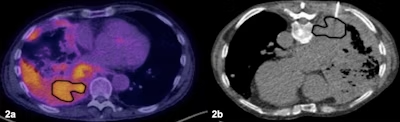
Repeat CT-guided biopsy Ok, trial does not support PET-CT in diagnostic pathway of non-diagnostic pleural biopsy suggests a new study published in the European Respiratory Journal.

Pleural biopsy is the gold standard for diagnosis of pleural malignancy but a significant proportion will have an inconclusive biopsy despite ongoing clinical suspicion of malignancy. They investigated whether positron emission tomography-computed tomography (PET-CT) targeted pleural biopsy is superior to standard CT-guided pleural biopsy following an initial non-diagnostic biopsy. The TARGET trial was a multicentre, parallel group randomised trial. Patients with a previous inconclusive pleural biopsy but an ongoing suspicion of pleural malignancy were randomised (1:1) to receive either CT-guided biopsy (standard care) or PET-CT followed by a targeted CT biopsy (intervention).

The primary outcome was pleural malignancy correctly identified from the trial biopsy. Results: Between September 2015 and September 2018, 59 participants were randomised from eight UK hospital sites: 29 to CT-only followed by targeted biopsy and 30 to PET-CT followed by targeted biopsy. The proportion of pleural malignancy correctly identified was similar between the groups (risk ratio 1.03 (95% CI 0.83–1.29); p=0.77). The sensitivity of the trial biopsy to identify pleural malignancy was 79% (95% CI 54–94%) in the CT-only group versus 81% (95% CI 54–96%) in the PET-CT group. The results do not support the practice of PET-CT to guide pleural biopsies in patients with a previous non-diagnostic biopsy. The diagnostic sensitivity in the CT-only group was higher than anticipated and supports the practice of repeating a CT-guided biopsy following an inconclusive result if clinical suspicion of malignancy persists.

Reference:

Duneesha de Fonseka, David T. Arnold, Helena J.M. Smartt, Lucy Culliford, Louise Stadon, Emma Tucker, Anna Morley, Natalie Zahan-Evans, Anna C. Bibby, Geraldine Lynch, Eleanor Mishra, Shahul Khan, Mohammed Haris, Henry Steer, Leon Lewis, Alina Ionescu, John Harvey, Kevin Blyth, Najib M. Rahman, Anthony E. Edey, Chris A. Rogers, Nick A. Maskell European Respiratory Journal 2024 63: 2301295; DOI: 10.1183/13993003.01295-2023

Powered by WPeMatico

Simple measurement can predict risk of worsening of widespread kidney disease

A team of researchers from Aarhus University has found a simple method to predict which individuals are at high risk of rapid progression of chronic kidney disease. This could be a significant step towards more effective prevention and treatment.

About ten percent of the Danish population suffers from chronic kidney disease, and some individuals experience rapid deterioration after the diagnosis is made.

Now, a team of researchers from Aarhus University in a comprehensive study has investigated the precise risk of rapid progression, and the result could be a significant step towards more effective treatment of the disease.

The study, which is based on data from Danish health registers, provides healthcare professionals with new insights into how to better identify patients at high risk of rapid worsening of kidney disease.

“We chose to investigate chronic kidney disease because some of the patients experience rapid deterioration of their condition without us knowing exactly who. Our goal was to understand which patients are most at risk and whether we can intervene early to delay or even prevent this progression,” says Professor at the Department of Clinical Medicine at Aarhus University, Christian Fynbo Christiansen, one of the authors of the study.

A simple measurement

The study showed that patients with newly diagnosed mild to moderate chronic kidney disease within three years have a 15 percent risk of rapid progression, which could lead to severe cardiovascular disease or even death.

Surprisingly, the study also showed that the risk of rapid progression varied significantly among patients.

A simple measurement of protein in the urine proved to be a strong indicator of the course of kidney disease.

For women without diabetes or elevated blood pressure/cardiovascular disease and without the protein albumin in their urine, the risk of rapid progression was seven percent, while the risk peaked at 47 percent for men with both diabetes, elevated blood pressure/cardiovascular disease, and albumin in their urine.

“This is an important finding since albumin can be used as an indicator of kidney disease progression, thereby making it possible to identify patients at high risk of rapid deterioration of the disease, and it can improve the prevention of complications and hopefully increase patients’ quality of life,” explains Christian Fynbo Christiansen, adding:

“It underscores the need to use this simple test to a far greater extent.”

Benefit for patients and society

The measurement can help healthcare professionals to target treatment and follow-up to patients at high risk. This could potentially be a significant gain for patients both in Denmark and the rest of the world.

“We hope that this result can contribute to increased awareness of the importance of using readily available markers – including albumin in the urine – to identify patients at high risk of rapid progression,” says Christian Fynbo Christiansen.

And it’s not only the patients who can benefit from the results. Faster and more effective prevention could also potentially help to reduce healthcare costs.

“I think we will focus much more in the future on patients with milder stages of the disease, like those we included in this study. If we get better at preventing and treating chronic kidney disease and its associated complications, it could potentially benefit both patients and society,” explains Christian Fynbo Christiansen.

He emphasizes that further research and development of precise treatment methods are still needed. Although the study provides important insight into risk groups, a precise model for predicting individual patient outcomes is still lacking.

Reference:

Anne H S Vestergaard, Simon K Jensen, Uffe Heide-Jørgensen, Line E Frederiksen, Henrik Birn, Dorte E Jarbøl, Jens Søndergaard, Frederik Persson, Reimar W Thomsen, Christian F Christiansen, Risk factor analysis for a rapid progression of chronic kidney disease, Nephrology Dialysis Transplantation, 2024;, gfad271, https://doi.org/10.1093/ndt/gfad271.

Powered by WPeMatico

Patch test and biopsies may help detect gingival hypersensitivity reactions to oral hygiene products

Patch test and biopsies may aid in the detection of gingival hypersensitivity reactions to oral hygiene products suggests a new study published in the Journal of American Dental Association.

Hypersensitivity reactions to toothpaste are rare. The objective of this study was to present the authors’ clinical cases in the past 10 years and perform a scoping review of gingival hypersensitivity responses to toothpaste. The authors reviewed records of documented gingival hypersensitivity reactions to dentifrices at the Postgraduate Clinic of Oral Medicine, Complutense University, Madrid, Spain, from January 2013 through December 2022. Furthermore, the authors conducted a search in PubMed with no date limit for articles reporting these hypersensitivity responses up through October 18, 2023. Results: Eleven cases were collected from the clinic. Eight gingival hypersensitivity reactions occurred in women, and 6 were associated with cinnamon. The most frequent lesions diagnosed were red gingiva. The discontinuation of the toothpaste led to the disappearance of the lesions. The search yielded 643 references. Thirteen articles were included in the scoping review, all of them case series and case reports, reporting 32 cases. Lesions affected middle-aged women most frequently, the most common hypersensitivity reaction was gingival redness, and the cases implicated toothpastes containing cinnamon and herbal composition. This study provides clues for diagnosing and treating hypersensitivity reactions to toothpaste, which may improve the identification, management, and reporting of these cases.

Reference:

López-Pintor RM, González-Serrano J, Ivaylova Serkedzhieva K, Serrano Valle J, de Arriba L, Hernández G, Sanz M. Gingival hypersensitivity reactions to toothpaste: A case series and scoping review. J Am Dent Assoc. 2024 Jan 11:S0002-8177(23)00680-3. doi: 10.1016/j.adaj.2023.11.003. Epub ahead of print. PMID: 38206258.

Keywords:

Patch test, biopsy, detection, gingival, hypersensitivity reactions, oral hygiene products, López-Pintor RM, González-Serrano J, Ivaylova Serkedzhieva K, Serrano Valle J, de Arriba L, Hernández G, Sanz M, Journal of American Dental Association, Hypersensitivity reactions; allergic reactions; dentifrice; gingiva; hypersensitivity response; toothpaste.

Powered by WPeMatico

Triple combo of alpha-lipoic acid, epalrestat, and mecobalamin better for treating diabetic peripheral neuropathy than monotherapy : study

A triple combo of alpha-lipoic acid, epalrestat, and mecobalamin is better for treating diabetic peripheral neuropathy than monotherapy finds a new study published in the Journal of Diabetes and its Complications.

Alpha-lipoic acid, epalrestat, and mecobalamin are widely used as monotherapies for diabetic peripheral neuropathy. However, whether a triple-combination therapy with these three drugs is superior to monotherapy or dual therapy remains debatable. Nine randomized controlled trials were identified through a search on electronic databases such as PubMed, Web of Science, and Cochrane Library. The trial participants (N = 1153) were divided into the experimental group which received the triple-combination therapy and the control group who received conventional or dual therapy with the aforementioned drugs. Results: Therapeutic outcomes were better in the experimental group than in the control group (odds ratio: 3.74; 95 % confidence interval: 2.57–5.45; I2 = 0 %; p < 0.00001).

No statistical difference was noted in adverse effects. Compared with the control group, the experimental group exhibited significant improvements in median motor nerve conduction velocity (MNCV), sensory nerve conduction velocity (SNCV), peroneal MNCV, peroneal SNCV, and vibration perception thresholds (VPT) in the left and right lower limbs. In the control group, a subgroup analysis by treatment strategy revealed similar improvements in total efficacy, MNCV, and SNCV. For diabetic peripheral neuropathy, triple-combination therapy may be more effective than monotherapy or dual therapy.

Reference:

Gui-Lin Ran, Yan-Ping Li, Li-Chin Lu, Shao-Huan Lan. Disease-modifying therapies for diabetic peripheral neuropathy: A systematic review and meta-analysis of randomized controlled trials. Journal of Diabetes and its Complications, Volume 38, Issue 2, 2024, 108691, ISSN 1056-8727. https://doi.org/10.1016/j.jdiacomp.2024.108691. (https://www.sciencedirect.com/science/article/pii/S1056872724000175)

Powered by WPeMatico

Feeding donor human milk versus preterm formula during birth hospitalization, which is better for preterm infants? Study sheds light

USA: A recent study published in the Journal of the American Medical Association (JAMA) showed comparable 2-year neurodevelopmental outcomes among extremely preterm infants fed donor human milk versus infants fed preterm formula.

“In the randomized clinical trial, the Bayley Scales of Infant and Toddler Development (BSID) adjusted mean cognitive score for infants fed donor human milk was 80.7 (measured at 22-26 months corrected age) versus 81.1 for infants fed preterm formula (adjusted between-group mean difference, −0.77), which was not a significant difference,” the researchers reported. Also, there was no difference in the adjusted mean language and motor scores.

Maternal milk feeding of extremely preterm infants during birth hospitalization has been linked with better neurodevelopmental outcomes compared to the preterm formula. For infants receiving no or minimal maternal milk, there is no information on whether donor human milk conveys similar neurodevelopmental advantages versus preterm formula.

To fill this knowledge gap, Tarah T. Colaizy, University of Iowa, Iowa City, and colleagues aimed to determine if among extremely preterm infants who received minimal maternal milk, nutrient-fortified, pasteurized donor human milk improves neurodevelopmental outcomes at 22 to 26 months corrected age compared with preterm infant formula.

For this purpose, the research team conducted a double-blind, randomized clinical trial at 15 US academic medical centres within the Eunice Kennedy Shriver National Institute of Child Health and Human Development Neonatal Research Network. The study enrolled infants younger than 29 weeks 0 days gestation or with a birth weight of less than 1000 g between 2012 and 2019.

Exposures were preterm formula or donor human milk feeding from randomization to 120 days of age, death, or hospital discharge. • Of 1965 eligible infants, 483 were randomized (239 in the donor milk group and 244 in the preterm formula group); the median gestational age was 26 weeks, the median birth weight was 840 g, and 52% were female.

The study’s primary outcome was the BSID cognitive score measured at 22 to 26 months corrected age; a score of 54 (score range, 54-155; a score of ≥85 indicates no neurodevelopmental delay) was assigned to infants who died between randomization and 22 to 26 months corrected age. The 24 secondary outcomes included BSID language and motor scores, necrotizing enterocolitis, in-hospital growth, and death.

Key findings of the study include:

  • Fifty-four infants died before follow-up; 88% of survivors were assessed at 22 to 26 months of corrected age.
  • The adjusted mean BSID cognitive score was 80.7 for the donor milk group vs 81.1 for the preterm formula group (adjusted mean difference, −0.77, which was not significant); the adjusted mean BSID language and motor scores also did not differ.
  • Mortality (death before follow-up) was 13% in the donor milk group vs 11% in the preterm formula group (adjusted risk difference, −1%).
  • Necrotizing enterocolitis occurred in 4.2% of infants in the donor milk group vs 9.0% of infants in the preterm formula group (adjusted risk difference, −5%).
  • Weight gain was slower in the donor milk group (22.3 g/kg/d) compared with the preterm formula group (24.6 g/kg/d).

“Neurodevelopmental outcomes at 22 to 26 months’ corrected age did not differ between infants fed donor milk or preterm formula, among extremely preterm neonates fed minimal maternal milk,” the researchers concluded.

Reference:

Colaizy TT, Poindexter BB, McDonald SA, et al. Neurodevelopmental Outcomes of Extremely Preterm Infants Fed Donor Milk or Preterm Infant Formula: A Randomized Clinical Trial. JAMA. Published online January 30, 2024. doi:10.1001/jama.2023.27693

Powered by WPeMatico

Tirzepatide, novel agent for treating type 2 diabetes has different efficacy in Asians and non-Asians: Study

China: A recent meta-analysis published in Diabetes Therapy has shed light on the comparative safety and efficacy of tirzepatide in Asians and non-Asians with type 2 diabetes mellitus (T2DM).

Jianjun Dong, Shandong University, Jinan, Shandong, China, and colleagues revealed that tirzepatide is a novel agent for diabetes treatment and has different efficacy in Asians and non-Asians. They found that tirzepatide exhibited greater efficacy in regulating blood glucose levels among non-Asian patients versus Asian patients while demonstrating a more pronounced body weight reduction among Asian patients as opposed to non-Asian patients.

Concerning adverse events, Asian patients exhibited a higher incidence of gastrointestinal adverse events compared to non-Asian patients receiving the same dosage. Conversely, non-Asian patients showed a higher incidence of nutrition and metabolic disorders in comparison to Asian patients.

“Asians were more likely to experience gastrointestinal adverse events and weight loss, whereas non-Asians were more likely to have better glycemic control and more nutritional and metabolic disorders,” the researchers reported.

There has been an increase in the incidence of type 2 diabetes mellitus (T2DM) in recent years and displays variations in pathophysiological mechanisms between Asians and non-Asians; Asian patients constitute more than half of the global patient population.

Tirzepatide is a novel treatment that acts as a dual agonist of GIP and GLP-1 receptors. The 2023 guidelines issued by the American Diabetes Association support tirzepatide as a favourable treatment option for patients with obesity and T2DM. However, there is no clarity on the safety and efficacy of tirzepatide in Asian or non-Asian patients with T2DM.

Against the above background, the research team aimed to provide evidence on the varying safety and efficacy of tirzepatide with different dose formulations for type 2 diabetes patients, looking for possible differences in safety and efficacy in Asians, considering the significant heterogeneity observed between Asians and non-Asians in terms of age of onset, BMI, and fat distribution. In the context of the study, Asian populations were represented by patients from China, Japan, South Korea, and India.

For this purpose, the researchers conducted a literature search in online databases for clinical studies of tirzepatide for type 2 diabetes. Two authors independently performed the data extraction process.

The systematic review and meta-analysis involved 2118 patients with T2DM from 6 studies, with tirzepatide doses ranging from 5 to 15 mg administered subcutaneously once weekly.

Based on the research, the researchers reported the following findings:

  • Compared with the control/placebo, tirzepatide was more effective in decreasing fasting blood glucose (FBG) in non-Asians than in Asians, and 10 mg rather than 15 mg was the optimal dose to decrease FBG.
  • Non-Asians were more effective than Asians in improving glycated haemoglobin (HbA1c).
  • Asians were significantly more effective than non-Asians in reducing body weight and ≥ 5% weight loss.
  • In terms of adverse events, the incidence of gastrointestinal adverse events was higher in Asians than in non-Asians at the same dose, while the incidence of metabolic and nutrition disorders was higher in non-Asians than in Asians.

“This paper adds to the growing body of knowledge showing different antidiabetic drug responses in Asians and non-Asians. Such studies if confirmed by other groups, could pave the way for precision treatment of obesity and diabetes which are rapidly rising globally in Asia,” the researchers concluded.

Reference:

Cui, Y., Yao, J., Qiu, X. et al. Comparative Efficacy and Safety of Tirzepatide in Asians and Non-Asians with Type 2 Diabetes Mellitus: A Systematic Review and Meta-Analysis. Diabetes Ther (2024). https://doi.org/10.1007/s13300-024-01540-7

Powered by WPeMatico

Religious people coped better with the Covid-19 pandemic, research suggests

People of religious faith may have experienced lower levels of unhappiness and stress than secular people during the UK’s Covid-19 lockdowns in 2020 and 2021, according to new University of Cambridge research.

The findings follow a recently published Cambridge-led study suggesting that worsening mental health after experiencing Covid infection-either personally or in those close to you-was also somewhat ameliorated by religious belief. This study looked at the US population during early 2021.

University of Cambridge economists argue that-taken together-these studies show that religion may act as a bulwark against increased distress and reduced wellbeing during times of crisis, such as a global public health emergency.

“Selection biases make the wellbeing effects of religion difficult to study,” said Prof Shaun Larcom from Cambridge’s Department of Land Economy, and co-author of the latest study. “People may become religious due to family backgrounds, innate traits, or to cope with new or existing struggles.”

“However, the Covid-19 pandemic was an extraordinary event affecting everyone at around the same time, so we could gauge the impact of a negative shock to wellbeing right across society. This provided a unique opportunity to measure whether religion was important for how some people deal with a crisis.”

Larcom and his Cambridge colleagues Prof Sriya Iyer and Dr Po-Wen She analysed survey data collected from 3,884 people in the UK during the first two national lockdowns, and compared it to three waves of data prior to the pandemic.

They found that while lockdowns were associated with a universal uptick in unhappiness, the average increase in feeling miserable was 29% lower for people who described themselves as belonging to a religion.*

The researchers also analysed the data by “religiosity”: the extent of an individual’s commitment to religious beliefs, and how central it is to their life. Those for whom religion makes “some or a great difference” in their lives experienced around half the increase in unhappiness seen in those for whom religion makes little or no difference.**

“The study suggests that it is not just being religious, but the intensity of religiosity that is important when coping with a crisis,” said Larcom.

Those self-identifying as religious in the UK are more likely to have certain characteristics, such as being older and female. The research team “controlled” for these statistically to try and isolate the effects caused by faith alone, and still found that the probability of religious people having an increase in depression was around 20% lower than non-religious people.

There was little overall difference between Christians, Muslims and Hindus-followers of the three biggest religions in the UK. However, the team did find that wellbeing among some religious groups appeared to suffer more than others when places of worship were closed during the first lockdown.

“The denial of weekly communal attendance appears to have been particularly affecting for Catholics and Muslims,” said Larcom. The research is published as a working paper by Cambridge’s Faculty of Economics.

For the earlier study, authored by Prof Sriya Iyer, along with colleagues Kishen Shastry, Girish Bahal and Anand Shrivastava from Australia and India, researchers used online surveys to investigate Covid-19 infections among respondents or their immediate family and friends, as well as religious beliefs, and mental health.

The study was conducted during February and March 2021, and involved 5,178 people right across the United States, with findings published in the journal European Economic Review in November 2023.

Researchers found that almost half those who reported a Covid-19 infection either in themselves or their immediate social network experienced an associated reduction in wellbeing.

Where mental health declined, it was around 60% worse on average for the non-religious compared to people of faith with typical levels of “religiosity”.

Interestingly, the positive effects of religion were not found in areas with strictest lockdowns, suggesting access to places of worship might be even more important in a US context. The study also found significant uptake of online religious services, and a 40% lower association between Covid-19 and mental health for those who used them.

“Religious beliefs may be used by some as psychological resources that can shore up self-esteem and add coping skills, combined with practices that provide social support,” said Prof Iyer, from Cambridge’s Faculty of Economics.

“The pandemic presented an opportunity to glean further evidence of this in both the United Kingdom and the United States, two nations characterised by enormous religious diversity.”

Added Larcom: “These studies show a relationship between religion and lower levels of distress during a global crisis. It may be that religious faith builds resilience, and helps people cope with adversity by providing hope, consolation and meaning in tumultuous times.”  

Reference:

Girish Bahal, Sriya Iyer, Kishen Shastry, Anand Shrivastava, Religion, Covid-19 and mental health, European Economic Review, 2023, https://doi.org/10.1016/j.euroecorev.2023.104621.

Powered by WPeMatico

GLP-1 receptor agonists can dial down inflammation in the brain, raising hopes for treating neurodegenerative diseases

USA: Evidence suggests that glucagon-like peptide 1 (GLP-1) receptor agonists that reduce obesity can reduce inflammation in the kidneys, liver and heart. The drugs even seem to dial down inflammation in the brain, leading researchers to hope that the compounds could be used to treat Alzheimer’s and Parkinson’s diseases, both of which are characterized by brain inflammation.

A recent review listed more than 20 clinical trials that are exploring the drugs as therapies for the two conditions.

“The next generation of drugs could be even more targeted to reduce these new inflammation pathways that we’ve identified,” says Daniel Drucker, an endocrinologist at the University of Toronto in Canada who co-authored a study investigating how the drugs dampen inflammation. “Maybe they would be more effective.”

The GLP-1 receptor agonists include semaglutide, which is marketed as Ozempic for diabetes and Wegovy for obesity, and tirzepatide, marketed as Zepbound for obesity and Mounjaro for diabetes. The drugs mimic a gut hormone called glucagon-like peptide 1, which acts on the brain to dampen appetite, in addition to controlling blood sugar levels. But many previous studies have showcased the ability of the hormone and its mimics to calm inflammation, caused by an onslaught of immune cells and immune-system chemicals.

In one experiment, a GLP-1 receptor agonist called liraglutide reduced liver inflammation in mice with fatty liver. A similar effect was seen in a pilot study with people. In other experiments in mice, liraglutide demonstrated anti-inflammatory potential in the heart and the kidneys. GLP-1 itself reduces inflammation in fat tissue in obese and diabetic mice.

The reductions in blood sugar and body weight that the drugs trigger probably help to control inflammation. However, some of the drugs’ anti-inflammatory effects start even before meaningful weight loss is achieved. This is why scientists think there’s a separate mechanism at play.

Drucker and his team observed a potential clue: receptors for GLP-1 are scarce in immune cells in many tissues in which the hormone and its mimics reduce inflammation, but are abundant in the brain. To test the role of the nervous system, Drucker’s team began by inducing system-wide inflammation in mice.

“Multiple GLP-1 drugs made those mice better and reduced inflammation,” Drucker says. However, when the researchers used either genetic methods or drugs to block GLP-1 receptors in the animals’ brains, the GLP-1 drugs no longer reduced inflammation in multiple tissues. The findings were published in Cell Metabolism on December 2.

The anti-inflammatory powers of the GLP-1 drugs are promising for treating neurodegenerative diseases such as Alzheimer’s and Parkinson’s. Both are characterized by neuroinflammation that is not effectively targeted by current therapies. In both disorders, pathological proteins — for example, alpha-synuclein in Parkinson’s and beta-amyloid in Alzheimer’s — interact with certain receptors in the brain to induce a cascade of events that cause inflammation.

Excessive inflammation can contribute to disease, says Nigel Greig, a pharmacologist at the National Institutes of Health in Baltimore, Maryland. But GLP-1 receptor agonists seem to have the ability to knock back inflammation in the brain so that important processes, such as the birth of new neurons, can continue to occur, he notes.

In one clinical trial, a GLP-1 receptor agonist called exenatide resulted in greater improvement in the abilities of patients with Parkinson’s than did a placebo. The medication is now being assessed in a trial involving a larger population of people with Parkinson’s and should conclude this year. At least two clinical trials are investigating semaglutide as a therapy for early-stage Alzheimer’s disease.

The drugs’ anti-inflammatory action might also help to boost their effectiveness against diabetes and obesity, says Vinicius de Frias Carvalho, a biologist at the Inflammation Laboratory at the Oswaldo Cruz Institute in Rio de Janeiro, Brazil.

Both conditions “are also inflammatory diseases”, he says. Semaglutide’s anti-inflammatory action might play a part in an effect that recently made headlines: the drug provides strong protection against cardiovascular disease in people with obesity.

The use of GLP-1 drugs to treat inflammation-related diseases could expand even further, Greig says, especially given the drugs’ lack of significant side effects. “There are so many systemic disorders where there’s an inflammatory component,” he says. It only makes sense, he says, to try the drugs against such disorders if there’s no effective treatment.

Reference:

Lenharo, M. (2024). Obesity drugs have another superpower: Taming inflammation. https://doi.org/10.1038/d41586-024-00118-4

Powered by WPeMatico